Century Conifers
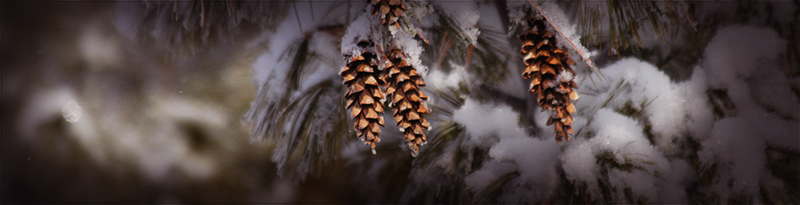
The majestic Eastern White Pine is Ontario's Provincial Tree and a symbol of the north woods. As one of the tallest trees in eastern North America, Eastern White Pines have been known to tower upwards of 70 metres.
The University of Guelph Arboretum houses the legendary remains of E.J. Zavitz’s Eastern White Pine plantation, an Ontario first. Before the early 1800’s, much of the land that currently houses the University of Guelph Arboretum, and most of the Speed River valley for that matter, was dense forest. However, that would soon change. Between 1827 and 1873, John Galt and his “boys” began to cultivate the area for agricultural purposes, which meant clear-cutting this spectacular woodland. By the end of the 19th century, the region’s rich topsoil, formed by the decomposition of thousands of years of tree trunks, branches and leaves, was washed or blown away. The result was an ecological nightmare, eventually creating an early dustbowl effect.
An upward view of one of The Arboretum's Century Pines.
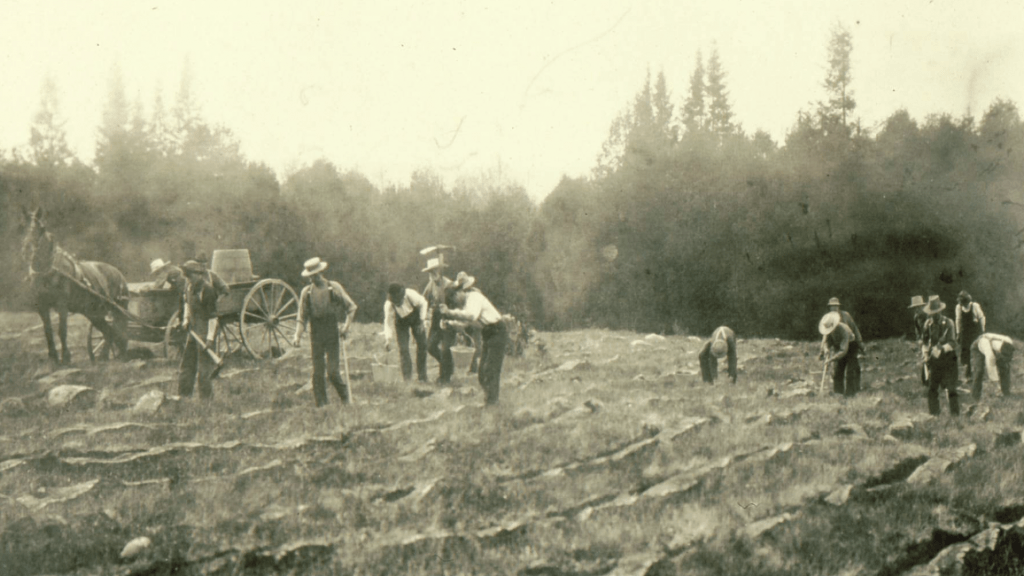
In 1907, E.J. Zavitz (at the Ontario Agricultural College) was studying if pine trees could reduce the loss of soil. Zavitz began planting rows of White Pines at the the corner of College Ave. and Victoria Rd., unintentionally creating the starting point for the University of Guelph Arboretum. It's even more remarkable that Zavitz’s experiment marked the first documented plantation of the White Pines in Ontario. Though Zavitz left the OAC later that year, his plantation thrived until the great tornado of 1985. Since then, the staff and volunteers at The Arboretum have gone to great lengths to restore Zavitz’s pioneering plantation. Luckily, a handful of these legendary White Pines remain and continue to grow; a testament to both nature and the legacy of Zavitz himself. The remaining Century Pines stand as iconic heirlooms to the City of Guelph.
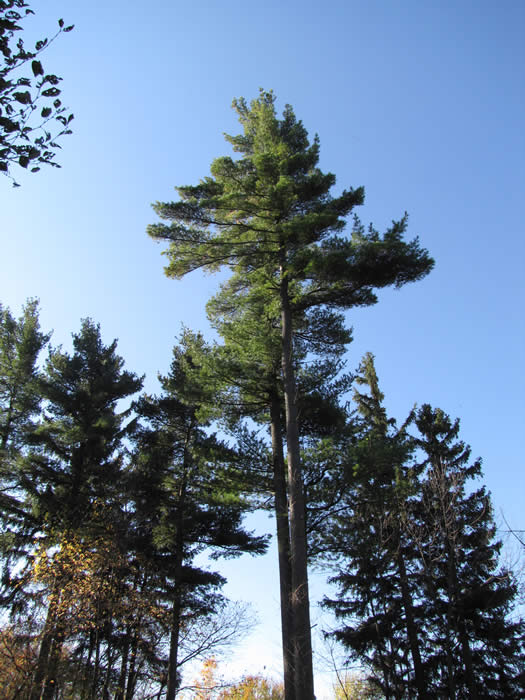
An upward view of one of The Arboretum's Century Pines.
Zavitz planted both native Eastern White Pine and Norway Spruce trees as part of his forest restoration research and efforts. These remain some of the oldest known planted trees in The Arboretum. Donations to support this area can be made. Donations to dedicate a Zavitz conifer start at $5,000.
For more information, please contact the Arboretum Director, at arbor@uoguelph.ca or call 519-824-4120 ext. 52356.