The Permaculture Garden
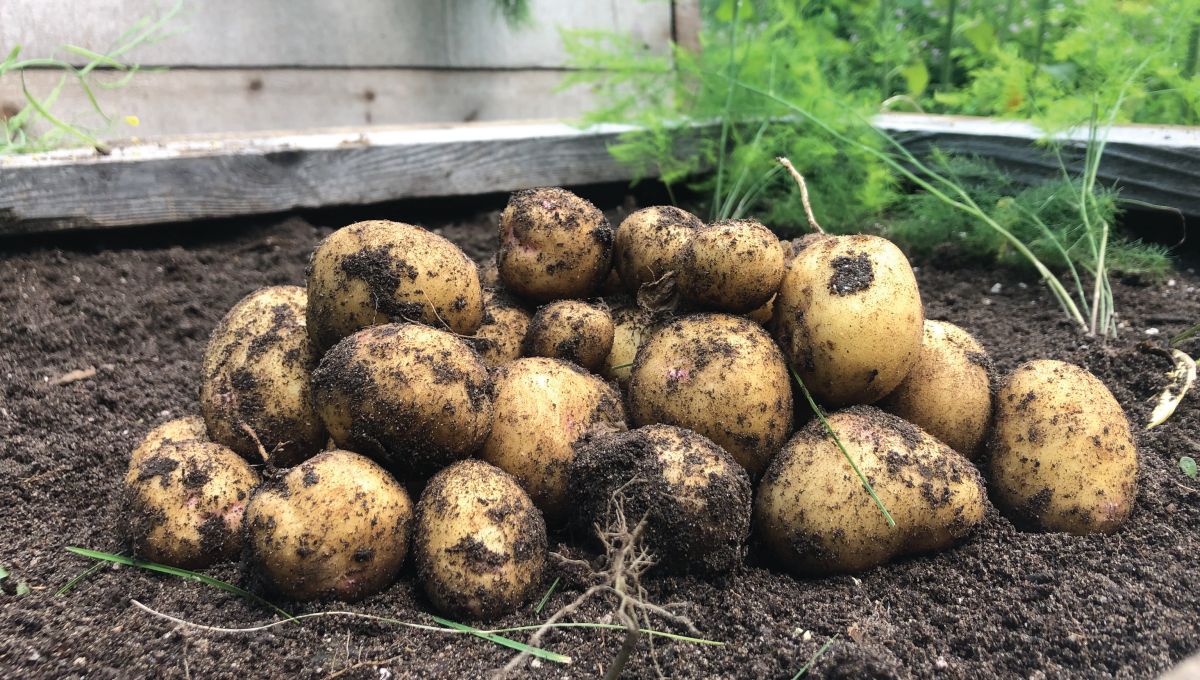
Photo by Cael Wishart
Permaculture is recognized as a widely popular sustainable approach to gardening. It is short for the term “permanent culture”, and encompasses everything from recycling, reusing, and regenerating to simply just observing. The guiding principle of this approach is replicating patterns of growth and harvest that occur naturally, limiting our contact with the landscape as much as possible. Some vital features of permaculture displayed in this setting are succession planting, companion planting, plant stacking, and soil preservation through different methods of composting and reuse of dead plants.
You have probably heard of the Yukon Gold potato, but did you know it was developed here at the University of Guelph? This globally popular potato was developed at the University of Guelph during the 1960’s. It is valued for its diseased-resistant flesh and ability to grow in many different regions around North America. The Department of Plant Agriculture works on the creation of new crop varieties such as this which are eventually produced at a local and global scale. Here, we can display some of these varieties to recognize their success as well as highlighting the importance of choosing to buy and/or grow local foods. By doing this you can drastically reduce your carbon footprint which in turn supports wildlife in many ways.
Plant List
This garden currently features edible shrubs and perennials loved by birds and other wildlife, including Black Raspberry (Rubus occidentalis) and American Highbush Cranberry (Viburnum trilobum).
File attachments
File attachments
| Attachment | Size |
|---|---|
 GWG 4 The Permaculture Garden Plant List & Map.pdf GWG 4 The Permaculture Garden Plant List & Map.pdf | 17.28 MB |