Watch our new short film celebrating the legacy of Henry Kock and 25 years of the Elm Recovery Project's work to identify, test, and propagate genetically diverse Dutch Elm Disease–resistant White Elm
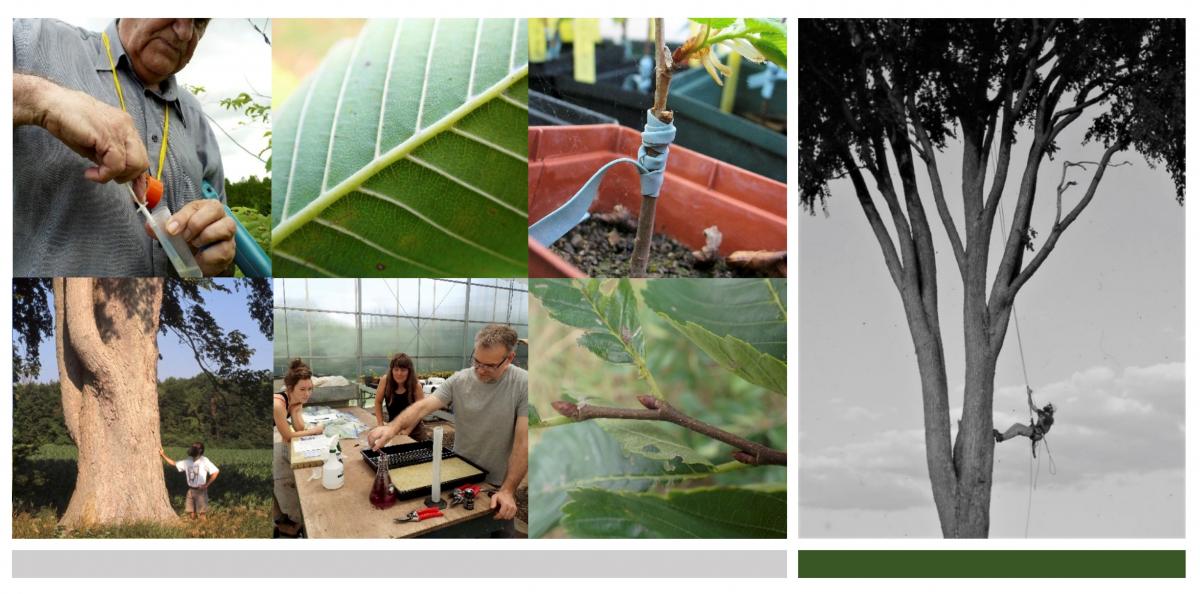
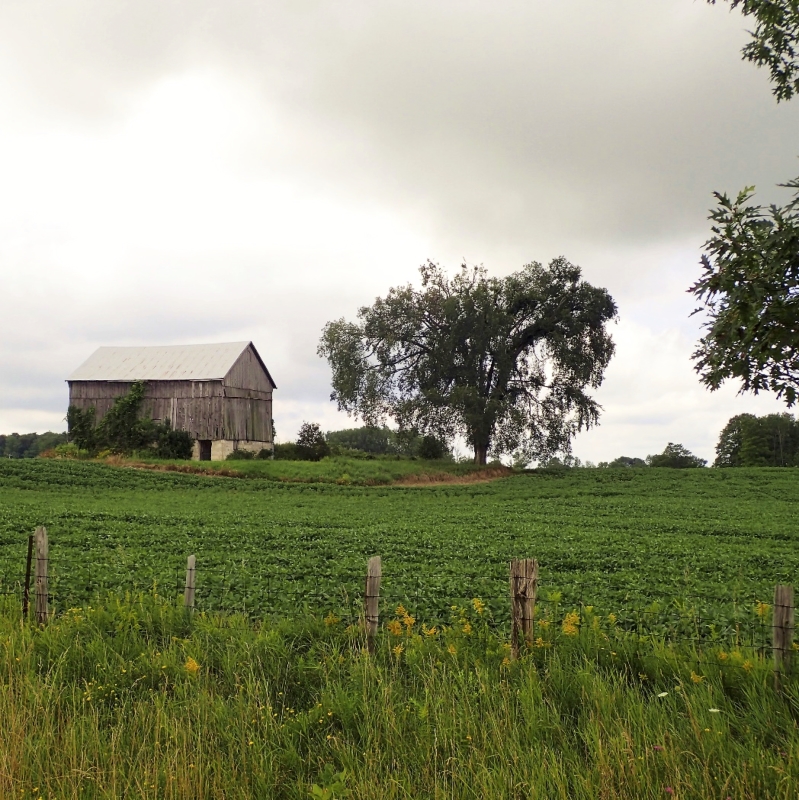
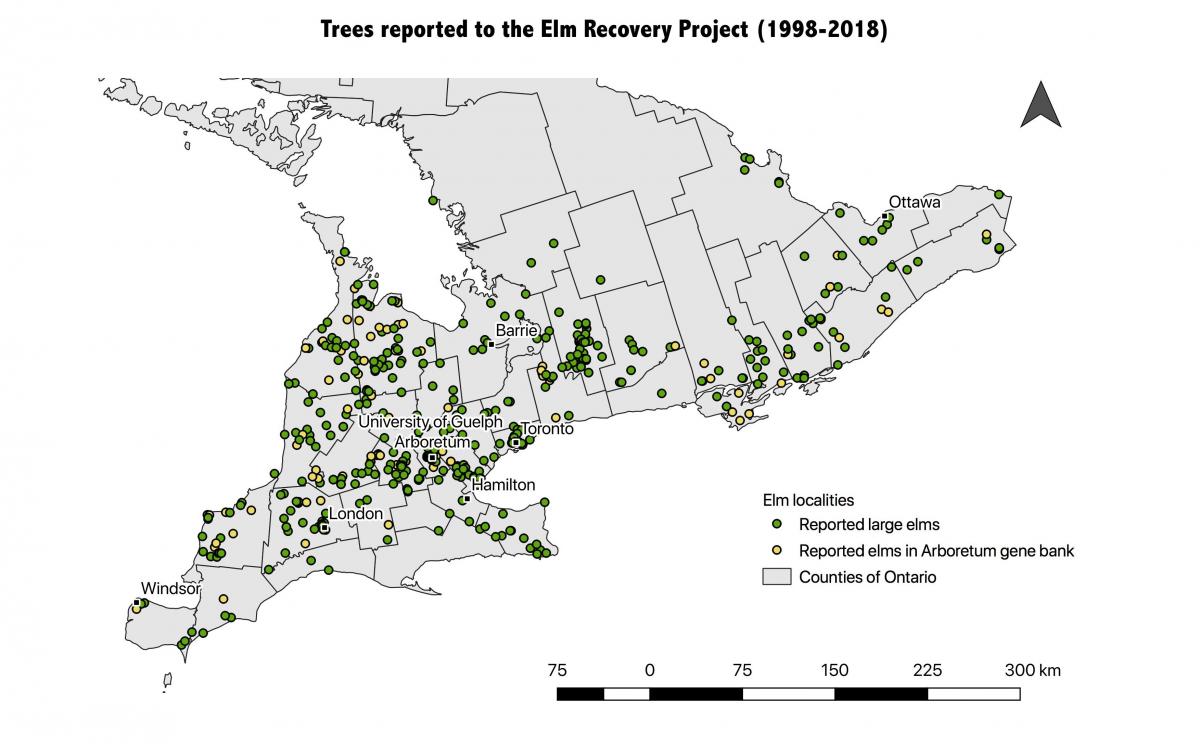
The Elm Recovery Project (ERP) began in 1998 through the efforts of former Arboretum interpretive horticulturalist Henry Kock, whose curiosity was piqued by observing large elm trees across Ontario that appeared to have survived infection by Dutch elm disease. The on-going aim of the project is to assist the recovery of white elm from the impacts of Dutch elm disease by reintroducing genetically diverse populations of disease-tolerant elms to the Ontario landscape, and was aptly described by the media as a "dating service" for lonely elms. With the help the Canadian Broadcasting Corporation (CBC) and many newspapers, over 800 large surviving elm trees throughout Ontario have been reported to the ERP, from Windsor to Sault Ste. Marie and as far east as Ottawa. The most promising of these trees have been screened through inoculation trials at The Arboretum and the top performers are currently being produced for distribution to satellite orchards around the province. It is hoped that boosting local gene pools with pollen from elms known to possess disease tolerance will speed the recovery process as the favourable traits of the orchard trees are passed on to the next generations of genetically diverse elm seedlings.
How you can get involved
If you would like to submit a report of a large white elm in your area (> 250 cm circumference), please find the Elm Recovery Reporting Form below or contact elmrecov@uoguelph.ca [1].
The operations of the Elm Recovery Project are funded by the Henry Kock Tree Recovery Endowment, which supports the recovery of many rare and endangered woody plants at The Arboretum. We gratefully acknowledge all levels of support to the project, and information on how to contribute can be found on our donor page [2].