The Black Gum is the only native species of Nyssa in Canada and occurs primarily in areas north of Lake Erie. Another name for the Black Gum is the Black Tupelo. They are usually found in wet sites that feature a shallow water table. The Black Gum is a shade tree, and is often planted in gardens due to its golden autumn leaves and shiny blue fruits. The fruits have been deemed too sour for human tastes, but are a crucial source of food for animals such as the fox, pileated woodpeckers and wild turkeys.
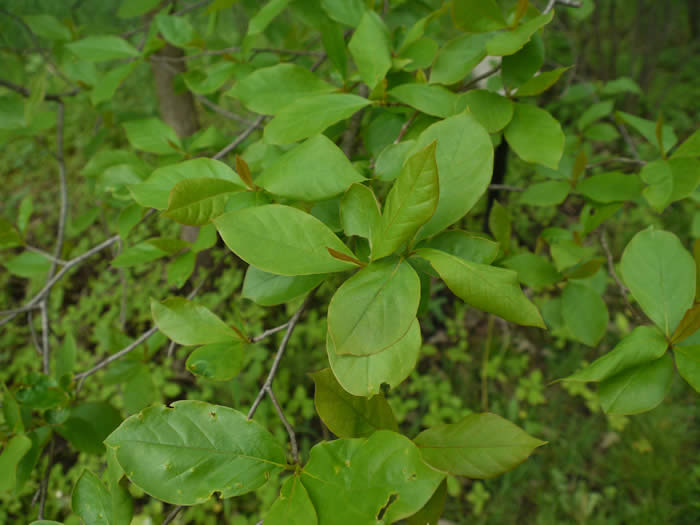
These leaves are alternate and measure 5-12 cm in length. Photo by Jesse Wolf.
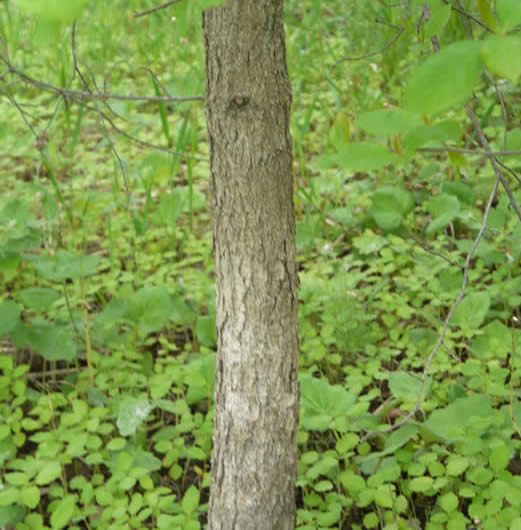
The bark of the Black Gum is grey, with block-shaped segments of irregular ridges. Photo by Jesse Wolf.
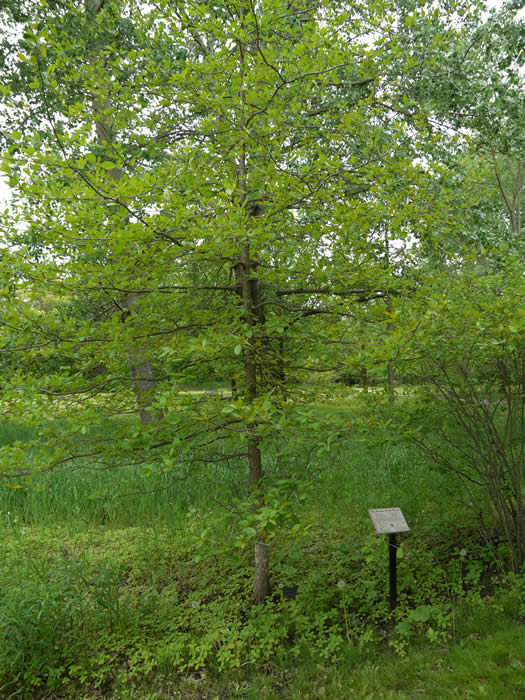
The Black Gum is a small tree, and is able to reach up to 20 metres in height. As you progress farther south, the height of the trees increase. Photo by Jesse Wolf.
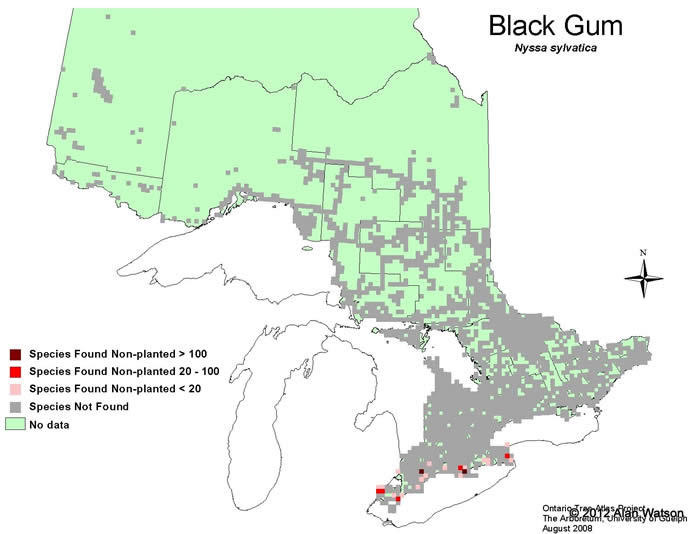
Ontario Tree Atlas map of non-planted Black Gums. 1995-1999.
Return to tree listing page [1]
References
Farrar, J.L.. 1995. Trees in Canada. Fitzhenry & Whiteside Ltd. Toronto. ON. 504 pp.
Kershaw, L. 2001. Trees in Ontario: Including tall shrubs. Lone Pine Publishing. Edmonton. AB. 240 pp
Muma, W. 2011. Ontario Trees and Shrubs. [Online] Available: www.ontariotrees.com
OMNR, 2011. Ontario Ministry of Natural Resources: Ontario Tree Atlas. [Online] Available: http://www.mnr.gov.on.ca/en/Business/ClimateChange/2ColumnSubPage/267027.html
OMNR, 2008. Ontario’s Biodiversity: Species at Risk.