Pin Cherry trees produce small, edible fruits, that are sour when raw, but make excellent preserves. However, all non-fruit parts of the tree contain toxins and are inedible. Pin Cherry grows quickly, and can also spread through suckers, making it useful for stabilizing eroding soils and riverbanks. Pin Cherry like open woodlands, and will readily colonize recently disturbed stands, helping to begin the reforestation process. These small trees only live about 40 years, but they produce a lot of fruit once mature, which many animals rely on in late summer. Pin Cherry fruits are so popular with songbirds that this tree is commonly known as Bird Cherry!
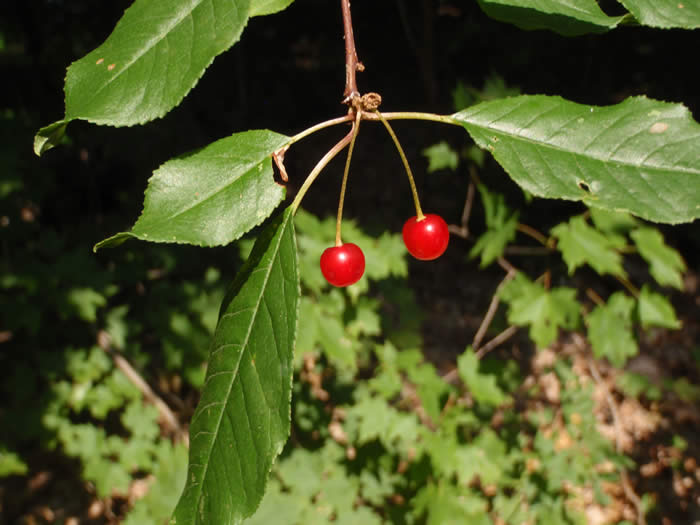
Pin Cherry fruits are a bright, scarlet red, and have been said to resemble clusters of pin heads in a pincushion. Photo by Chris Earley.
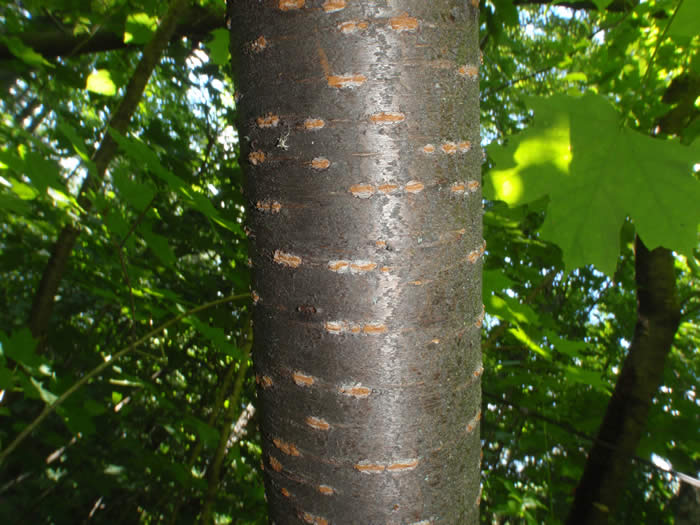
Pin Cherry bark is shiny, dark reddish-brown with large conspicuous lenticels. The bark separates into horizontal strips. Photo by Chris Earley.
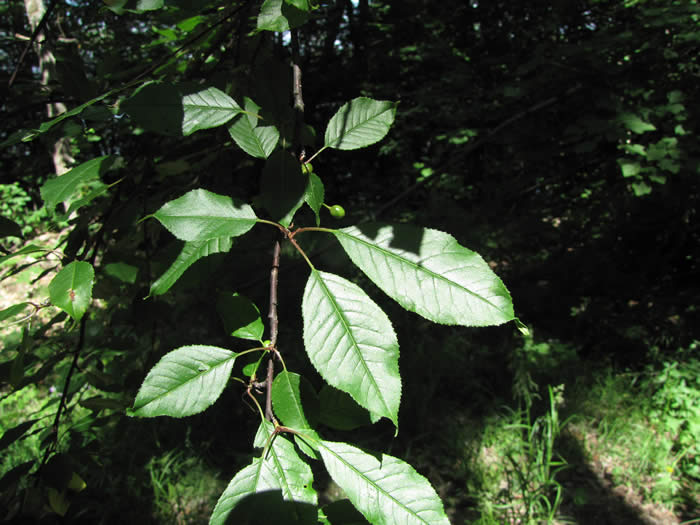
Pin Cherry leaves are long, narrow, with a slender tip and are edged with very fine teeth. They turn a dull purple-red in the fall. Photo by Chris Earley.
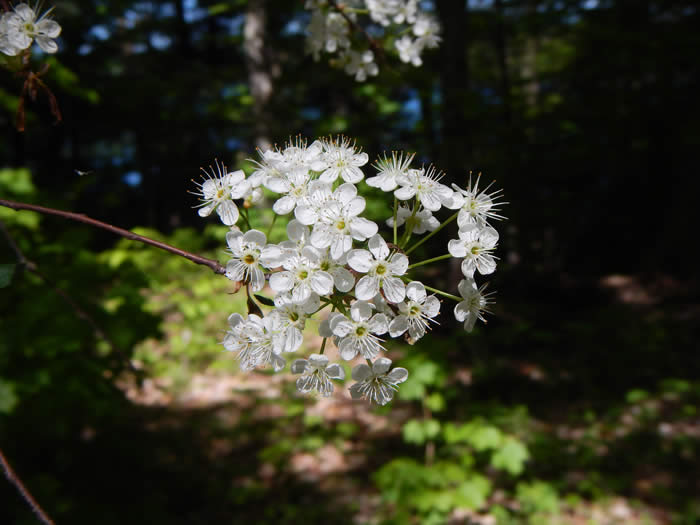
Pin Cherry flowers bloom in early spring in small white clusters. Photo by Chris Earley.
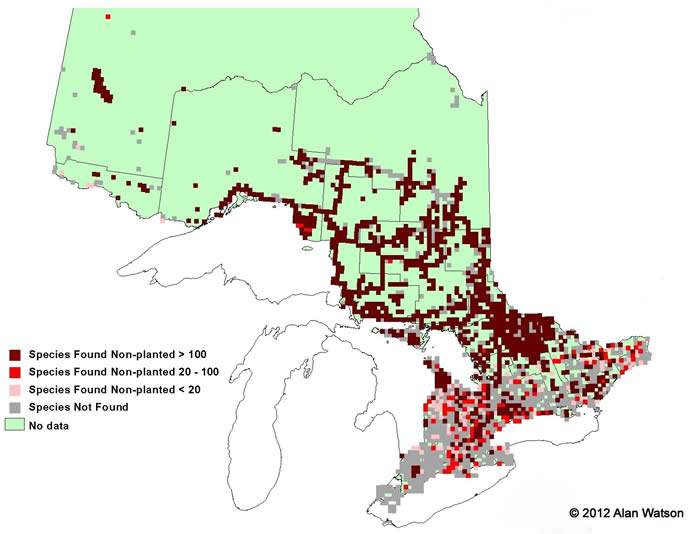
Ontario Tree Atlas map of non-planted Pin Cherry. 1995-1999.
Return to tree listing page [1]
References
Farrar, J.L.. 1995. Trees in Canada. Fitzhenry & Whiteside Ltd. Toronto. ON. 504 pp.
Kershaw, L. 2001. Trees in Ontario: Including tall shrubs. Lone Pine Publishing. Edmonton. AB. 240 pp
Muma, W. 2011. Ontario Trees and Shrubs. [Online] Available: www.ontariotrees.com
OMNR, 2011. Ontario Ministry of Natural Resources: Ontario Tree Atlas. [Online] Available: http://www.mnr.gov.on.ca/en/Business/ClimateChange/2ColumnSubPage/267027.html
OMNR, 2008. Ontario’s Biodiversity: Species at Risk.