bur oak - Quercus macrocarpa
Bur oak can look similar to white oak, but it has much shallower, rounded lobes on its leaves, and it is Canada’s most widespread oak species. With thick, corky bark and deep roots, bur oak can withstand drought and fire, which is why it is more common than other oaks in the Prairie Provinces. Bur oak acorns are sweet and edible, and have been used both traditionally and currently as a source of food, often ground into a flavourful flour and used to make bread. Bur oak acorns are somewhat distinctive, and have a fringe of overlapping, pointy scales at the tip.
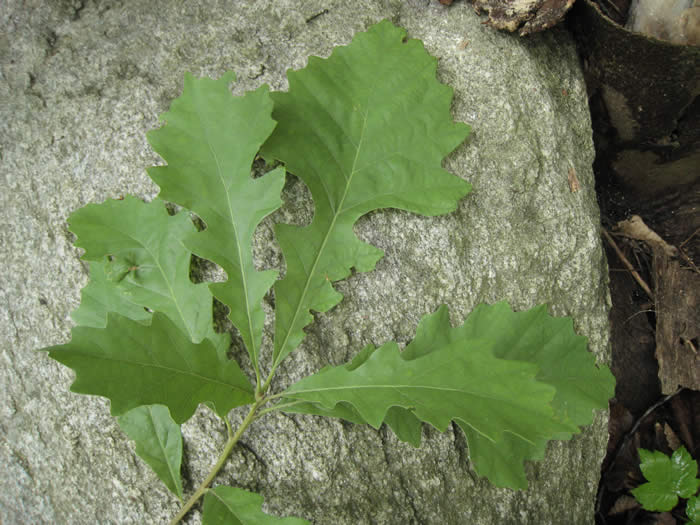
Bur oak leaves are pale and hairy on the underside. Photo by Sean Fox.
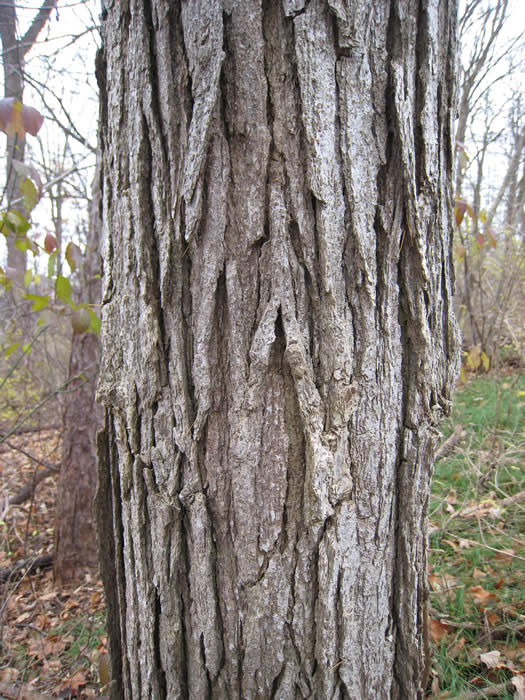
Bur oak form beautiful shade trees, with spreading branches and a distinctive, corky ridged bark. Photo by Sean Fox.
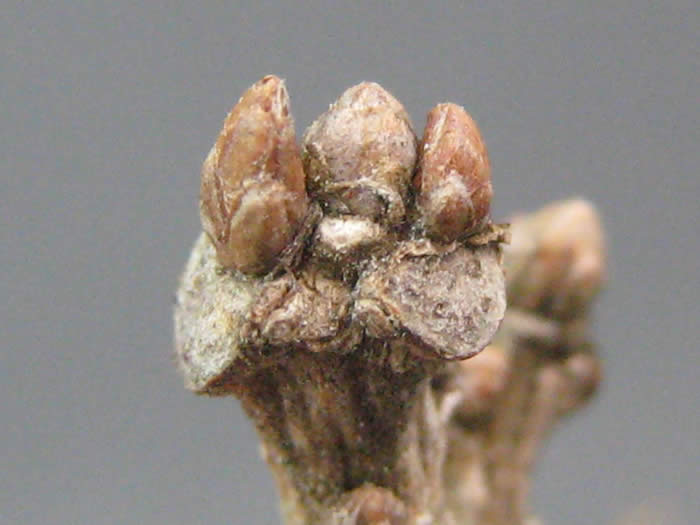
Terminal buds of the bur oak are 3-6 mm long, brown and hairy. They are usually surrounded by multiple pointed scales. Photo by Sean Fox.
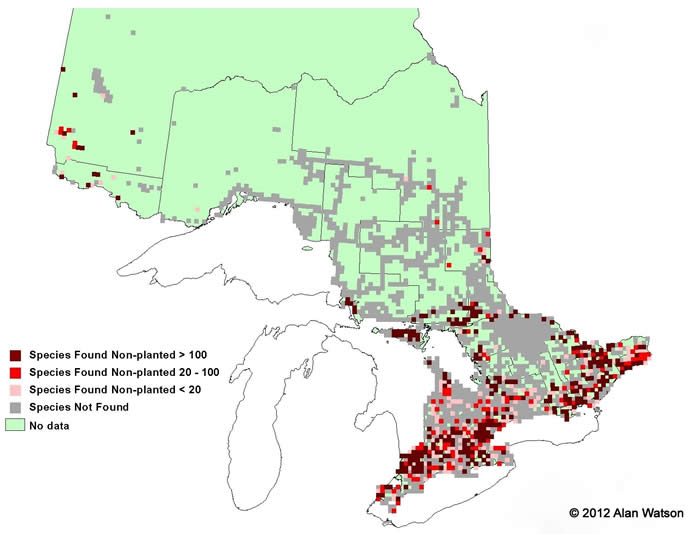
Ontario Tree Atlas map of non-planted Bur Oak. 1995-1999.
Return to tree listing page [1]
References
Farrar, J.L.. 1995. Trees in Canada. Fitzhenry & Whiteside Ltd. Toronto. ON. 504 pp.
Kershaw, L. 2001. Trees in Ontario: Including tall shrubs. Lone Pine Publishing. Edmonton. AB. 240 pp
Muma, W. 2011. Ontario Trees and Shrubs. [Online] Available: www.ontariotrees.com
OMNR, 2011. Ontario Ministry of Natural Resources: Ontario Tree Atlas. [Online] Available: http://www.mnr.gov.on.ca/en/Business/ClimateChange/2ColumnSubPage/267027.html
OMNR, 2008. Ontario’s Biodiversity: Species at Risk.